The invoice from the Town Hall has arrived, Impuesto sobre Construcciones, Instalaciones y Obras (ICIO) — a municipal tax levied on construction, installation, or works. Never previously have I been so excited to receive a tax bill for nearly a few thousand euros. There are 2 invoices, one for the processing of the paperwork that’s about 70 euros, and the other one is 3.75% of the costs associated with the works to be undertaken (I actually think I’ll spend less than we put on the form, so I might be over paying, but only time will tell).
It’s extremely likely that once paid I might receive the licence to commence works within the next month or two!!!
Why do I write or blog about this dull stuff? essentially we as humans, or maybe just me, forget the steps we go through in order to achieve an outcome. So writing about these mini successes and processes we needed to do along the way ensures that I don’t forget about them and the time it took or the excitement of it all!
I’m sure there are many set backs and challenges to come, so lets celebrate the mini wins.
💸 What Is the ICIO and Why Is It Trying to Charge Me A Chunk?
If you’re planning any kind of building work in Spain — converting an old shop into a creative coliving space, for instance 😉 — don’t be surprised when the local council hits you with something called the ICIO.
No, it’s not a typo. The Impuesto sobre Construcciones, Instalaciones y Obras (or ICIO) is a one-time construction tax that towns and cities charge when you apply to do building work. If you’re new to Spanish bureaucracy, this is one of those “hidden” costs that somehow always feels like it shows up just after you thought you were done paying for paperwork.
So… What Exactly Is It?
The ICIO is essentially the town hall saying:
“Oh, you’re improving a property? Making it nicer? Possibly adding value to it? Lovely. That’ll be 3–5% of the construction cost, please.”
And that’s it. It’s a municipal tax — it goes directly to the Ayuntamiento (town council) — and it’s calculated as a percentage of your estimated material construction cost.
Example (a real one, in fact):
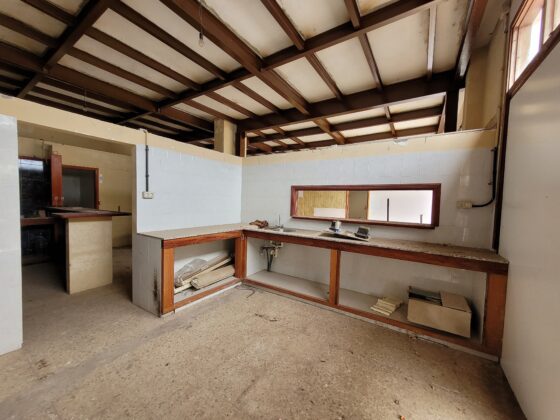
Let’s say you’re turning three empty commercial units in Bajamar into a coliving space (we might know someone doing exactly that).
The council applies a 3.75% rate, which is pretty standard.
That means I get a nice little tax bill.
You’re welcome.
When Do You Pay It?
Usually when you apply for the building permit, or shortly after. The town will issue a provisional liquidation (that’s just a fancy way of saying “initial invoice”) based on your declared budget. Later, if they discover your actual spend was much higher (say, you went marble-mad in the bathroom), they may issue a final settlement.
If your final spend is lower? Don’t hold your breath for a refund, but yes — in theory, they should recalculate.
Are There Discounts?
Yes. Sometimes.
- Social housing projects
- Renewable energy installations (solar panels, etc.)
- Renovation of listed/historic buildings
But — and this is Spain — it all depends on your specific municipality, your project type, and whether you know which form to fill out, and where to file it (and in what decade).
In our case? Bonificación: 0.00%.
No discount for us. Brutal.
Why It Matters for Coliving Projects
If you’re planning to open a coliving space — or any kind of creative reuse of existing property — budgeting for the ICIO up front is smart. It’s one of those things that can sneak up on you and mess with your cash flow at just the wrong moment.
It’s also a good reminder of how valuable a decent architect or project manager is. The kind who knows local rates, how to declare costs accurately, and might even spot an applicable bonification you didn’t know existed.
TL;DR: The ICIO is a local construction tax, usually around 4% of your build cost. It’s annoying, yes — but it’s also unavoidable. Plan for it early, pay it on time, and try not to cry into your cement mixer.
Want help navigating this kind of stuff for your own build or project? Or maybe you’re thinking of joining the next Nomadhut space as a resident or co-investor? Let’s talk — over something stronger than municipal paperwork.