Note: Away from trying to open a Coliving space in Tenerife I have a separate job as a contractor, to keep the lights on (…mainly so I can afford to buy tesco meal deals, and replace bits that break on my boat).
The space opening is for that contract role, I run that particular company on behalf of a group of 400+ business owners with active support of the local council, who are helping support what we are trying to do (and I might not be able to be as political in my views within that framework as I can here on my own blog, my views and/or me don’t align or belong to any one party, but give a sense of my position and purpose).
Not because “cheap” is the only goal.
Because runway matters when founders are trying to build something.
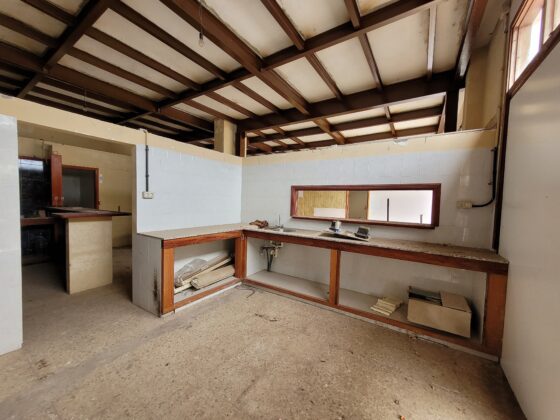
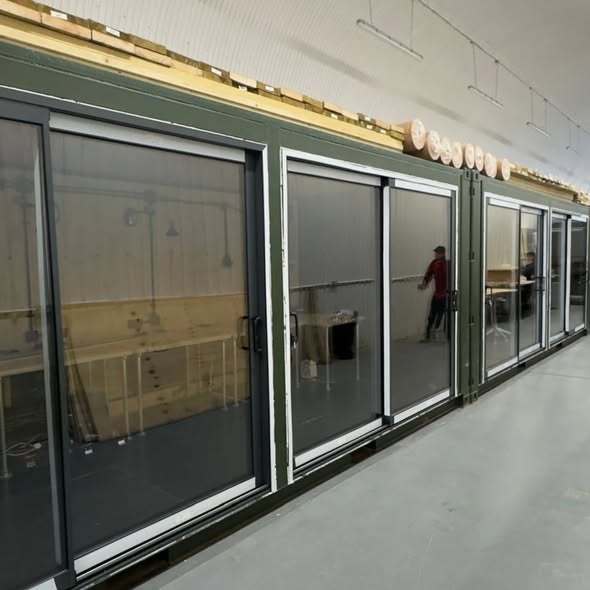
Yes, it’s raw. It’s not polished or shiny. But honestly, that stuff doesn’t matter nearly as much as people think. Look at the first workspaces of almost every major company. They start scrappy. They hustle hard. Some of them make it.
London has plenty of coworking and office spaces. We’re not trying to compete with them.
Our focus is simple: help people start.
Give them affordable space, useful infrastructure, and a community around them. Then, when they’re ready to stand on their own, there’s a mechanism to push them out of the nest, creating space for the next person to give their dream a go.
Anyone who has spent time in places like Guangzhou and Shenzhen knows just how far we still need to move the dial in the UK.
The UK has some of the best engineers, designers, researchers, creatives, and founders in the world.
We absolutely have the potential to build more great things (this isn’t some MAGA-style rant about making something great “again”).
But potential alone is not enough.
People need space.
People need time.
People need runway.
That’s why this matters.
That’s why the cost of living matters.
When housing costs, rents, transport, and basic survival consume most of a person’s income and mental bandwidth, fewer people can afford to experiment, take risks, build companies, develop products, learn difficult skills, or dedicate years to creating something meaningful.
Innovation does not emerge from permanent financial anxiety.
It emerges when talented people have enough stability to think long term.
To prototype.
To fail.
To retry.
To obsess over difficult problems.
We need more people making things.
More experimentation.
More hardware.
More software.
More robotics.
More AI products.
More manufacturing.
More exporting.
The UK cannot sustainably grow by endlessly selling services to itself while importing more and more of the products, technology, and infrastructure it depends on.
Balance of trade matters.
Academic economists will happily argue the toss on this with me about GDP and growth etc, and fair enough, debate is healthy. But as a founder and entrepreneur, I’ll stand my ground on it.
Countries that design, build, manufacture, and export valuable products create stronger long-term economic resilience. They create skilled jobs. They attract investment. They generate intellectual property. They create industries that compound over decades.
And right now, too many people in the UK with the ability to build something never even get to try.
Not because they lack talent.
Not because they lack ideas.
But because the runway disappears before the experiment has time to work.
That’s the real reason affordable workspaces matter.
A cheap desk, shared workshop, fast internet connection, or low-cost place to prototype might look insignificant on a spreadsheet, but sometimes that’s the difference between someone giving up… or building the next company that employs 50 people and exports products globally.
Some of the most important companies and technologies in the world began in cheap industrial units, garages, warehouses, spare rooms, and rough-looking workspaces that nobody would have described as “premium”.
The UK does not lack talent.
What we increasingly lack is affordable infrastructure around early-stage creation.
Affordable housing.
Affordable workspace.
Affordable energy.
Affordable manufacturing space.
Affordable internet.
Affordable logistics.
Those ecosystems in China didn’t emerge because every building was polished or because founders had perfect pitch decks.
They emerged…
Because supply chains were accessible.
Because experimentation was culturally normal.
Because builders were valued.
And, as I’ll never be in politics and have no real desire to go back to China, I can say this openly too: Their can be little doubt that as a nation they supported/subsidised industries that systematically destabilised global industries and thus killed a lot of manufacturing competition (last man standing principle). It’s actually quite impressive what has been achieved within a relatively short time frame, and as a competitive strategy worked (that’s not condoning it per se, but the impact on European nations has been significant, and has led them to having macro economic structural issues). From monitoring google analytics I can see that users in China visit this site, but also a significant bots from the US and China (so I’m sure I’ll end up on a database somewhere, and if I enter the country I might get asked a couple of questions). Also what I noticed having been to a lot of their trade shows they moved a lot of the manufacturing elements to neighbouring nations (for multiple reasons, and this isn’t an essay and I’m digressing massively into trade and tariffs realms).
So, lets go back to UK affordability…
One of the biggest economic conversations the UK think it has, but still avoids having properly is this:
The problem isn’t simply wages.
The problem is living costs, especially rent and housing costs.
For years, political focus has largely been on increasing wages (inc minimum and living wages) to help people keep pace with the cost of living (but this is a never ending treadmill).
And people absolutely should earn more.
People deserve to be paid properly for their work, and I say that as someone trying to build enterprises, not as an armchair commentator.
But there’s a difference between rising prosperity driven by productivity, innovation, and value creation…
…and wages constantly trying to chase an ever-rising cost base driven by housing, rent, debt, and asset inflation.
Because if every gain in wages is immediately absorbed by higher living costs, people still don’t feel economically secure.
And businesses, especially startups and smaller firms, struggle to compete globally.
I also increasingly think enterprises should think harder about the relationship between the highest-paid and lowest-paid people within an organisation.
Especially organisations calling themselves “social enterprises”.
I’d probably describe myself as a social entrepreneur, although the term has become diluted because there are very few meaningful structural requirements attached to it anymore.
To me, social enterprise should not just mean having nice branding and a mission statement.
It should mean building organisations that create real economic mobility, fairer access to opportunity, and healthier long-term outcomes for society (… a biggy for me would be a metric between the highest paid and lowest paid of a company).
That doesn’t mean nobody can make money. But generational wealth, and the ability for them to earn income from assets without proper capital gains is proper batshit crazy,.
People absolutely should be able to succeed financially from building valuable things.
But I do think healthier economies are built when prosperity is shared more broadly across the people helping create it.
Housing sits at the centre of this wider problem.
When rent absorbs huge amounts of income, it crushes experimentation, entrepreneurship, mobility, family formation, savings, and risk-taking.
It becomes harder to start companies.
Harder to build products.
Harder to accept lower-paid junior roles that lead to long-term careers.
Harder to invest in exporting industries.
Harder to compete globally.
And eventually the economy becomes dominated by asset inflation instead of productive output.
A country becomes globally competitive when talented people can afford to live, experiment, fail, retry, and build.
That requires affordable housing.
Affordable workspace.
Affordable transport.
Affordable energy.
And yes, resetting housing costs would involve pain.
If rents are constrained and housing inflation slows or reverses, then house prices wobble. Some people fall into negative equity. That is politically uncomfortable.
But permanently relying on rising house prices as a core economic strategy creates a different kind of instability.
At some point it begins to undo itself.
Because when a country becomes too expensive to build in, manufacture in, experiment in, or live in, it slowly loses competitiveness. Growth weakens. Productivity stagnates. Opportunities narrow. Younger generations lose faith in the system.
And when societies stop believing the future will be materially better, politics often turns inward.
People become angrier.
More fearful.
More tribal.
More nationalistic.
History shows this pattern repeatedly.
Economic stagnation and declining living standards create fertile ground for simplistic political narratives, scapegoating, and strongman politics.
That’s why these conversations matter beyond housing policy or coworking spaces.
They shape the long-term stability and direction of society itself.
Because if younger generations increasingly feel they have no realistic route to ownership, security, or upward mobility without inherited wealth, then eventually the social contract breaks down.
And when enough people feel economically trapped, they stop believing in institutions altogether.
If we want more exports, more innovation, more globally competitive companies, and more productive industries, then we need to lower the barriers to building things in the first place.
Because the next globally important company probably doesn’t start in a polished glass tower.
It probably starts with someone simply having enough runway to try.
…and one last thought on China, one of the things we really need to do is develop multiple UK/EU versions of hax, I’ll write a separate post on this.
I’ll probably add/edit this, so treat it as a draft.
#LetsExport #UKBalanceOfTrade #StartupUK