Europe and the UK spend a great deal of time debating productivity, innovation and competitiveness.
But increasingly, all roads lead back to the same problem.
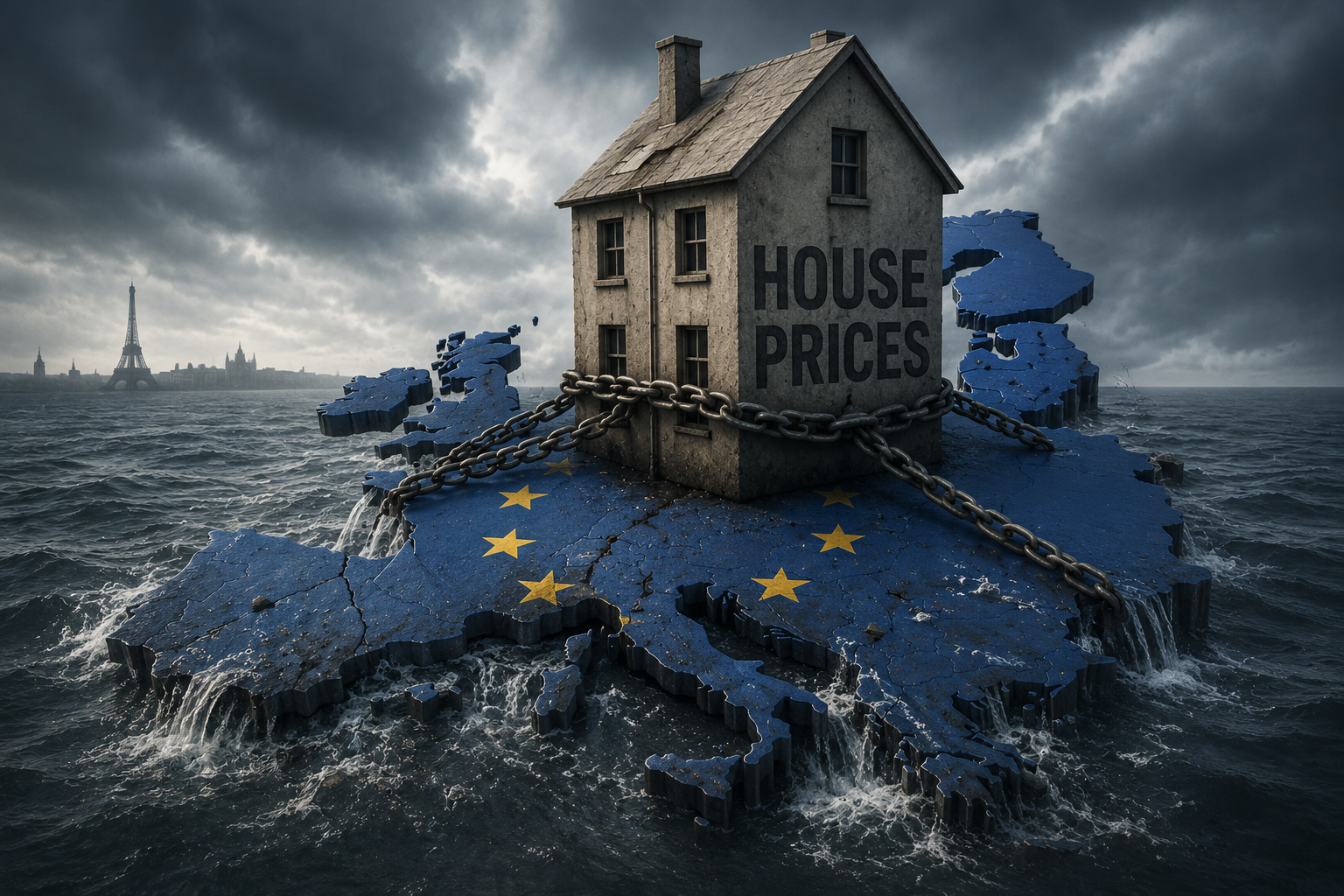
It is the property crisis.
We know it.
So let’s deal with it. Together.
We have some of the best universities in the world. Some of the best engineers. Some of the best designers, scientists, researchers, entrepreneurs, artists, makers and skilled tradespeople.
Yet increasingly, everyone is spending their lives just trying to afford somewhere to live.
Something has gone wrong.
If your house doubles in value, but every other house doubles in value too, then what have you actually gained?
You still own one house.
You still need one house.
Unless you’re planning on moving, your house price going up doesn’t help you.
Meanwhile, the consequences are very real.
Every pound spent on rising rents and mortgages is a pound that cannot be spent raising a family, starting a business, employing people, or building something new.
As property prices rise, everything else becomes more expensive too. And Europe struggles to stay competitive.
Businesses need more capital.
Employers must pay higher wages.
People delay starting families.
The economy slowly shifts from creating value to bidding against itself for the same pieces of land.
The tragedy is that we have started confusing wealth creation with wealth capture.
If someone builds a successful company, society becomes wealthier alongside them.
But if someone becomes wealthier because the value of a plot of land rises, what exactly has been produced?
Land is different.
Businesses can move.
People can move.
Land cannot.
That is why any serious attempt to improve competitiveness should focus on land and property.
Not because success should be punished.
But because speculation should not be rewarded more than creation.
A founder who builds a company creates jobs, products and opportunities.
A landowner may become wealthier simply because society around them becomes more successful.
Those are not the same things.
Yet our tax systems often treat them as though they are.
The principle can be simple.
If you occupy and use an asset, tax it less.
If you hold it primarily as an investment, tax it more.
A family living in their home and a business operating from its own premises are doing something remarkably similar.
They are using an asset.
They are not merely holding it.
We should make it easier to own the place where you live and easier to own the place where you create value.
That includes creating more pathways for businesses to acquire the premises they depend on.
Many of the buildings we most admire were created by people who expected to use them.
They invested because they expected to remain.
They cared about quality because they intended to occupy them for decades.
Owner-occupiers think differently.
They are more likely to invest for the long term.
More likely to improve what they own.
More likely to care about the surrounding area.
More likely to see a building as a place to live, work or create rather than simply an asset on a balance sheet.
A homeowner living in their property should face a lower burden.
A company operating from premises it owns should face a lower burden.
A healthy economy should not force productive businesses to spend decades enriching landlords.
Businesses should have more pathways to own the assets they depend on.
Too often, the people creating value rent from the people capturing value.
The business takes the risk.
The landlord captures much of the reward.
That balance has drifted too far.
What should face a higher burden is passive ownership.
Property portfolios.
Vacant buildings.
Land banks.
Property held primarily as a financial asset.
The distinction is not between rich and poor.
The distinction is between use and speculation.
Between creation and extraction.
Between building value and simply capturing it.
If Europe and the UK want to become more competitive, they need to shift incentives away from passive appreciation and towards productive activity.
They need to make it easier to build things than to sit on things.
This is not just a housing issue.
It is a competitiveness issue.
The cost of property eventually works its way into almost everything.
Into wages.
Into business premises.
Into the cost of starting a company.
Into the cost of growing one.
Every business operating in Europe and the UK carries those costs.
And when those businesses compete internationally, they do so with a heavier cost base than they otherwise would.
Property inflation does not simply make housing less affordable.
It makes entire economies less competitive.
The challenge, of course, is political.
Any policy that genuinely succeeded in making housing more affordable would almost certainly have a target of reducing property values.
Not slowing future growth.
Reducing them.
The usual response is that wages will eventually catch up.
But Europe and the UK do not have decades to wait.
If we believe that housing has become too expensive, then we must also accept the uncomfortable conclusion that housing needs to become less expensive.
There is no other way to make it affordable.
At present, property in many European cities is treated as a global investment asset.
Money flows in from around the world seeking a safe store of wealth.
When capital is used to build factories, fund startups, finance research, or expand productive businesses, new economic capacity is created.
When capital is used to bid up the price of existing homes and commercial buildings, the primary effect is often simply higher prices.
Europe and the UK need investment.
What they need more of is investment that builds things.
This is why investment property should be taxed differently from occupied property.
The objective is not to punish investment.
The objective is to encourage investment into productive activity rather than the passive ownership of scarce assets.
Of course, this becomes far more effective if countries act together.
If one country reforms its property market while its neighbours do not, some capital will simply move elsewhere in search of more favourable treatment.
That is one reason why the challenge increasingly needs to be viewed at a European level rather than purely a national one.
Europe already cooperates on competition policy, trade and financial regulation because some problems are difficult to solve country by country.
Property may increasingly be one of them.
If you live in a property, or operate a business from it, the tax burden should be lower.
If you primarily hold property as an investment, the tax burden should be higher.
Housing should be for living in.
Commercial property should be for creating value in.
The tax system should recognise the difference.
One of the most common objections is that wealthy people will leave.
Perhaps some will.
Many discussions about tax seem to begin from the assumption that Europe and the UK must do whatever is necessary to keep wealthy people from relocating.
I am not convinced.
Europe offers something valuable.
Democracy.
The rule of law.
Political stability.
Personal freedom.
If someone decides they would rather exchange those things for a lower tax bill elsewhere, that is their choice.
We should wish them well and ask them to leave their passport on the way out.
Any serious reform would probably increase my tax bill too.
I’m arguing for it anyway.
Because I think the wider benefits outweigh my personal interest.
The policy could make society richer while making many voters feel less wealthy.
Future generations would benefit enormously.
Current voters might not thank you for it.
That is why almost nobody touches it.
Instead, we continue treating rising property values as a success story even as home ownership falls, rents rise, and businesses face ever-higher costs.
The longer this continues, the more wealth is absorbed by land and the less is available for creating new value.
If Europe is serious about competitiveness, it must stop rewarding land inflation more than innovation.
Because ultimately there are two futures in front of us.
One where wealth increasingly comes from owning things.
And one where wealth increasingly comes from creating them.
The choice should be obvious.
The politics, unfortunately, are not.